
A structured introduction to Musical Instrument Digital Interface (MIDI): fundamentals, history, musical sequencing, performance control, hardware, software, MIDI 2.0, and expressive techniques.
Music Production Before MIDI: Constraints, Techniques, and Creative Possibilities
Before the emergence of MIDI in 1983, musicians and engineers could produce sophisticated multitrack recordings, compose with electronic instruments, sequence musical passages, and even use early digital samplers. None of those practices was invented by MIDI. What was missing was a widely adopted, manufacturer-independent digital language for exchanging musical performance and control information among electronic instruments and computers. The following comparison examines the material and practical limitations of the earlier studio—not to imply that pre-MIDI musicians lacked creativity, but to show why the new standard mattered. [1] [2]
1. Recording to Magnetic Tape
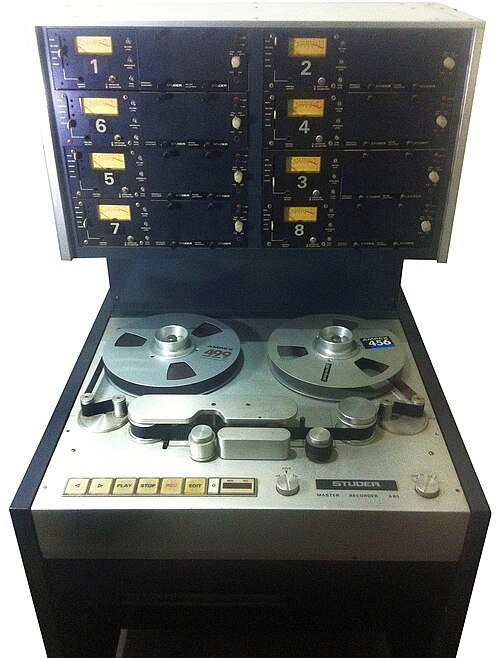

Multitrack tape machines offered a finite number of tracks, and tape itself was an expensive, physical recording medium. When tracks ran out, engineers could combine several tracks onto another track (often called bouncing or ping-ponging) to free space for more recordings. Such decisions could commit an arrangement or mix balance early, and analog copying could introduce additional noise and loss of fidelity. Recording onto an occupied track could overwrite the earlier material. Modern digital workstations, in contrast, commonly provide large track counts, duplicable takes, non-destructive editing, and undo histories, subject to computer and software limits. [3] [4]
2. Editing Was Physical and Time-Consuming
Engineers cut and spliced magnetic tape with razor blades and adhesive splicing tape, or recorded replacement passages by punching in. Editing an individual performance without disturbing nearby material could require intricate copying or rerecording. A modern DAW makes it relatively easy to move, trim, loop, duplicate, time-align, or replace discrete clips and to compile preferred phrases from multiple takes. Tape editing was nevertheless a powerful creative medium in its own right; it enabled compositional montage, tape loops, and the reorganization of recorded sound. [3] [4]
3. Performances Required Different Kinds of Precision
Without a modern piano roll, automatic quantization, and routine note-level editing, performers often needed to record a passage repeatedly until its timing, pitch, articulation, and dynamics were satisfactory. Engineers could punch in or splice alternative takes, but corrections were comparatively labor intensive. MIDI eventually made it possible to capture and revise note-onsets, note lengths, velocities, and controllers without rerecording the sound itself. Later DAW technologies extended detailed editing to recorded audio through tools such as time-stretching, transient alignment, and pitch correction. Those audio-editing technologies should not be attributed to MIDI. [4] [5]
4. Early Synthesizers Could Be Difficult to Connect or Reproduce
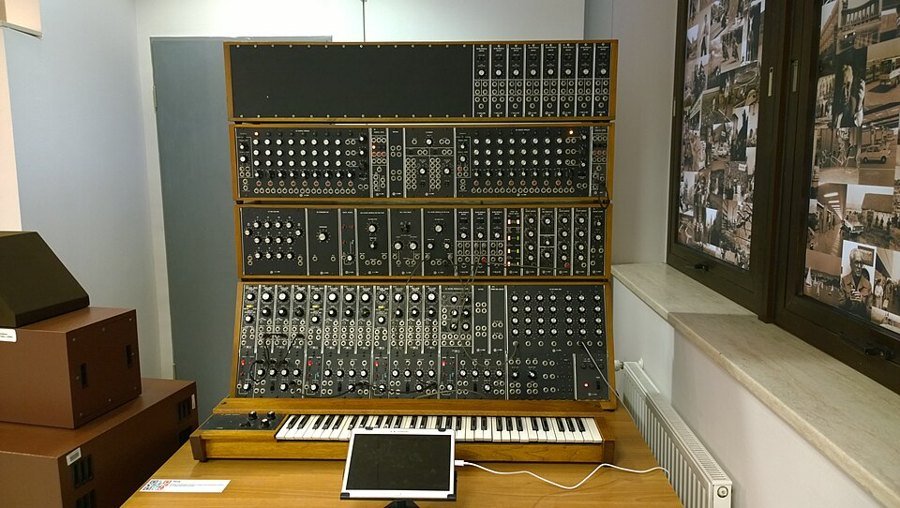

Many early synthesizers were monophonic; others offered limited polyphony. Sound settings could require manual knob and patch-cable adjustments, and precise recall was not always possible. Analog control voltage (CV), gate, and trigger connections could control pitch or events, but different voltage scales, trigger polarities, and proprietary systems hindered interoperability. MIDI made it practical for compatible instruments from different manufacturers to exchange standardized note and controller messages, while leaving synthesis and sound generation to the devices themselves. [1] [2]
5. Sequencing Existed Before MIDI—but Was Less Universal
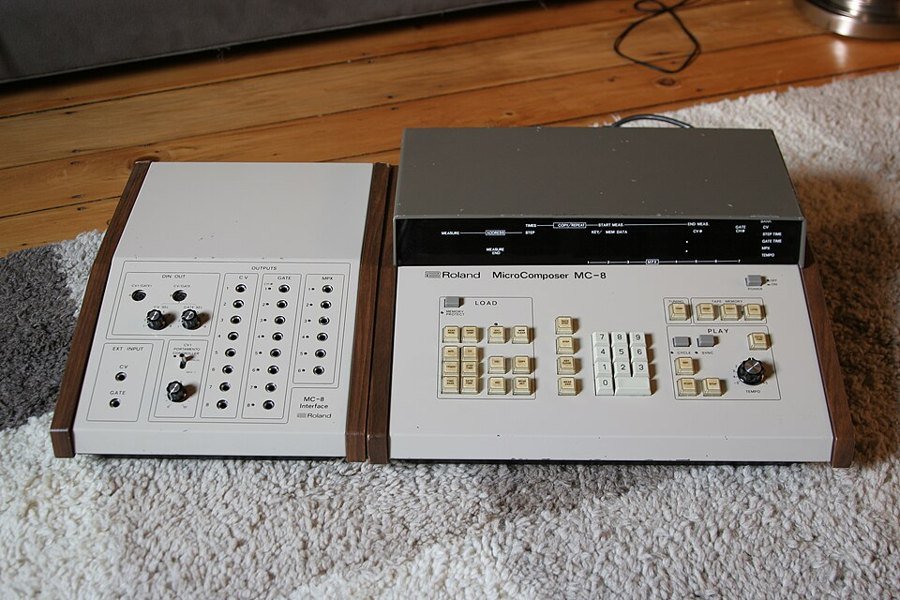

Analog step sequencers, digital hardware sequencers, and drum machines were available before 1983. Some digital sequencers could store sophisticated note patterns yet still transmitted CV/gate or proprietary control information. Systems might work impressively when assembled from compatible components, but connecting equipment from competing manufacturers often required conversion circuitry or custom synchronization. MIDI reduced this fragmentation and helped separate the musical data of a performance from the particular instrument producing its sound. [1] [6]
6. Synchronization Was a Major Engineering Challenge
Synchronizing drum machines, sequencers, and tape recorders could require a dedicated clock or pulse track, proprietary sync connections, or timecode-based systems. Not all clocks or start/stop schemes were compatible, and tape speed variations could complicate tight synchronization. MIDI later provided standardized timing-related messages, while MIDI Time Code and other synchronization tools developed further over time. MIDI did not eliminate every synchronization issue, and timecode is not the same thing as transmitting notes. [1] [2]
7. Early Sampling Was Powerful but Resource-Constrained
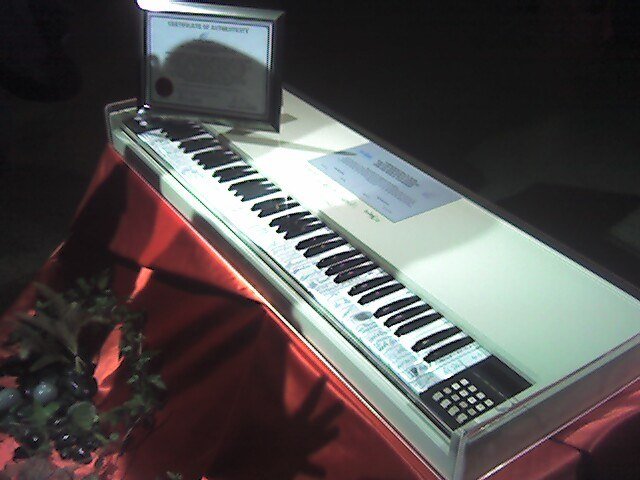

Early sampling systems such as the Fairlight CMI and E-mu Emulator demonstrated that recorded sounds could become playable instruments before MIDI became widespread. Memory, storage, sampling duration, fidelity, and polyphony were sharply constrained by the hardware available at the time. These constraints influenced musical decisions: short samples, creative looping, transposition artifacts, and selective use of available voices became features of distinctive production styles. Modern software samplers and affordable storage permit far larger multisample libraries and more elaborate editing, though these developments arose from advances in computing and digital audio as much as from MIDI. [7] [8]
8. Mixing, Automation, and Recall
On an analog console, mixes might involve several people moving faders and controls during playback. Returning to a previous mix could require written notes, track sheets, and the manual restoration of equipment settings. Analog automation systems existed, but they were neither universal nor necessarily affordable. In a modern DAW, volume, pan, plugin parameters, routing, and session organization can often be saved with the project and recalled precisely. MIDI controller messages can automate or remotely manipulate some equipment, but DAW project recall and digital audio automation are broader technologies. [4]
9. Expense, Access, and the Shape of Musical Creativity
Professional tape machines, mixing consoles, synthesizers, samplers, synchronization devices, and studio maintenance represented substantial investments. Contemporary software has made many formerly specialized capabilities accessible on general-purpose computers. This change did not simply make existing processes faster: it expanded who could work with complex arrangements, electronic instruments, and intricate editing. At the same time, technical restrictions in earlier studios encouraged preparation, rehearsal, decisive commitment, improvisation, and ingenious workarounds; those were creative conditions, not merely deficiencies. [5] [7]
Then and Now: A Concise Comparison
| Production task | Common pre-MIDI approach | Contemporary approach |
|---|---|---|
| Correct an instrumental performance | Rehearse, repeat a take, punch in, or splice tape | Edit MIDI notes or use non-destructive audio editing |
| Change an instrument sound after recording | Rerecord it, use manual patches, or retain compatible sequencer data | Assign MIDI performance data to another software or hardware instrument |
| Add tracks to a dense arrangement | Bounce or combine existing tape tracks | Create more tracks as system capacity permits |
| Connect multiple synthesizers | CV/gate, triggers, or proprietary digital interfaces | Standardized MIDI messages and compatible transports |
| Synchronize instruments | Pulse tracks, clocks, custom sync, or timecode | MIDI clock, timecode, and DAW synchronization mechanisms |
| Repeat and refine a passage | Perform, splice, loop tape, or use a dedicated sequencer | Loop MIDI or audio regions and refine timing and expression |
| Recall a production | Notes, patch sheets, and manual adjustment | Saved sessions, presets, and supported hardware recall |
These are broad contrasts, not absolute historical divisions: sequencing, digital editing, programmable synthesizers, and various forms of automation existed before MIDI, and some older workflows remain in use today.
What MIDI Changed—and What It Did Not
MIDI’s principal achievement was interoperability: standardized communication of musical gestures and instructions across compatible devices. MIDI does not carry recorded audio, and it did not itself invent multitrack recording, sampling, quantization, digital sound, pitch correction, or the modern DAW. Its lasting importance lies in making musical control information portable, editable, and independent of the instrument that renders it. [1] [5]
In 1981, industry efforts toward a common interface accelerated. A landmark public demonstration at the January 1983 NAMM show connected Sequential Circuits’ Prophet-600 and Roland’s Jupiter-6. Subsequent technical and organizational work established MIDI as a durable, cross-manufacturer standard. [2] [9]
Sources and Further Reading
Numbered citations refer to the discussion above. Sources include primary accounts, university teaching material, and historical or technical analyses.
[1] The MIDI Association — The History of MIDI, Chapter 5: Precursors to MIDI
CV/gate systems, proprietary interfaces, early sequencers, and the technical background to interoperability.
[2] The MIDI Association — MIDI History, Chapter 6: MIDI Begins, 1981–1983
Detailed historical account of the discussions, developers, and initial demonstration.
[3] The Open University — Recording Music and Sound, § 3.4: Editing
Physical tape editing, splicing, overdubbing, and historical creative practices.
[4] Sound On Sound — Audio Editing in DAWs
Differences between multitrack tape editing and non-destructive DAW editing.
[5] MIT OpenCourseWare — Music and Technology: Contemporary History and Aesthetics (lecture notes)
Early synthesizer control needs, MIDI’s development, and the distinction between MIDI information and sound.
[6] Sweetwater / inSync — The History of Sequencers
Analog and digital sequencing systems predating MIDI.
[7] Hugh Davies — A History of Sampling (1996)
Historical survey of sampling instruments and practices; published in Organised Sound.
[8] University of Washington — Sampling Synthesis (lecture slides)
Early Fairlight CMI hardware, sampling capabilities, and economic constraints.
[9] The MIDI Association — MIDI History, Chapter 7: MIDI Associations, 1983–1985
The post-demonstration process of technical specification, organizational formation, and standardization.