A guide to the vast world of spatial and surround sound technologies that are increasingly integrated in modern media we experience.
Head-Related Transfer Function (HRTF)
Head-related transfer function (Wikipedia)
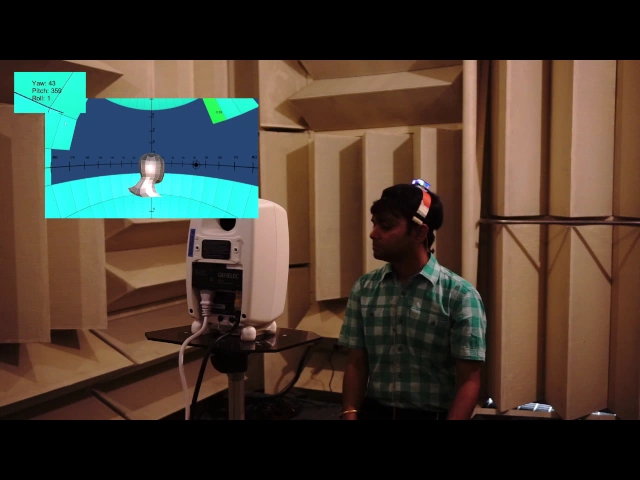
A head-related transfer function (HRTF) is a response that characterizes how an ear receives a sound from a point in space. As sound strikes the listener, the size and shape of the head, ears, ear canal, density of the head, size and shape of nasal and oral cavities, all transform the sound and affect how it is perceived, boosting some frequencies and attenuating others. Generally speaking, the HRTF boosts frequencies from 2–5 kHz with a primary resonance of +17 dB at 2,700 Hz. But the response curve is more complex than a single bump, affects a broad frequency spectrum, and varies significantly from person to person. A pair of HRTFs for two ears can be used to synthesize a binaural sound that seems to come from a particular point in space. It is a transfer function, describing how a sound from a specific point will arrive at the ear (generally at the outer end of the auditory canal). Some consumer home entertainment products designed to reproduce surround sound from stereo (two-speaker) headphones use HRTFs. Some forms of HRTF processing have also been included in computer software to simulate surround sound playback from loudspeakers.
HRTF Measurements of a KEMAR Dummy-Head Microphone (MIT)
An extensive set of head-related transfer function (HRTF) measurements of a KEMAR dummy head microphone was completed in May, 1994. The measurements consist of the left and right ear impulse responses from a Realistic Optimus Pro 7 loudspeaker mounted 1.4 meters from the KEMAR. Maximum length (ML) pseudo-random binary sequences were used to obtain the impulse responses at a sampling rate of 44.1 kHz. A total of 710 different positions were sampled at elevations from -40 degrees to +90 degrees. Also measured were the impulse response of the speaker in free field and several headphones placed on the KEMAR. This data is being made available to the research community on the Internet via anonymous FTP and the World Wide Web.